
Alan M. Turing, born on June 23, 1912, was a brilliant British mathematician, and scientist who laid the groundwork for the digital age with theoretical computer science, cryptography, and artificial intelligence.
His concept of a theoretical computing machine, known as the Turing machine, laid the foundation for the modern computer. Turing's work on the mathematical underpinnings of computation helped define the limits of what can be computed and how efficiently it can be done.
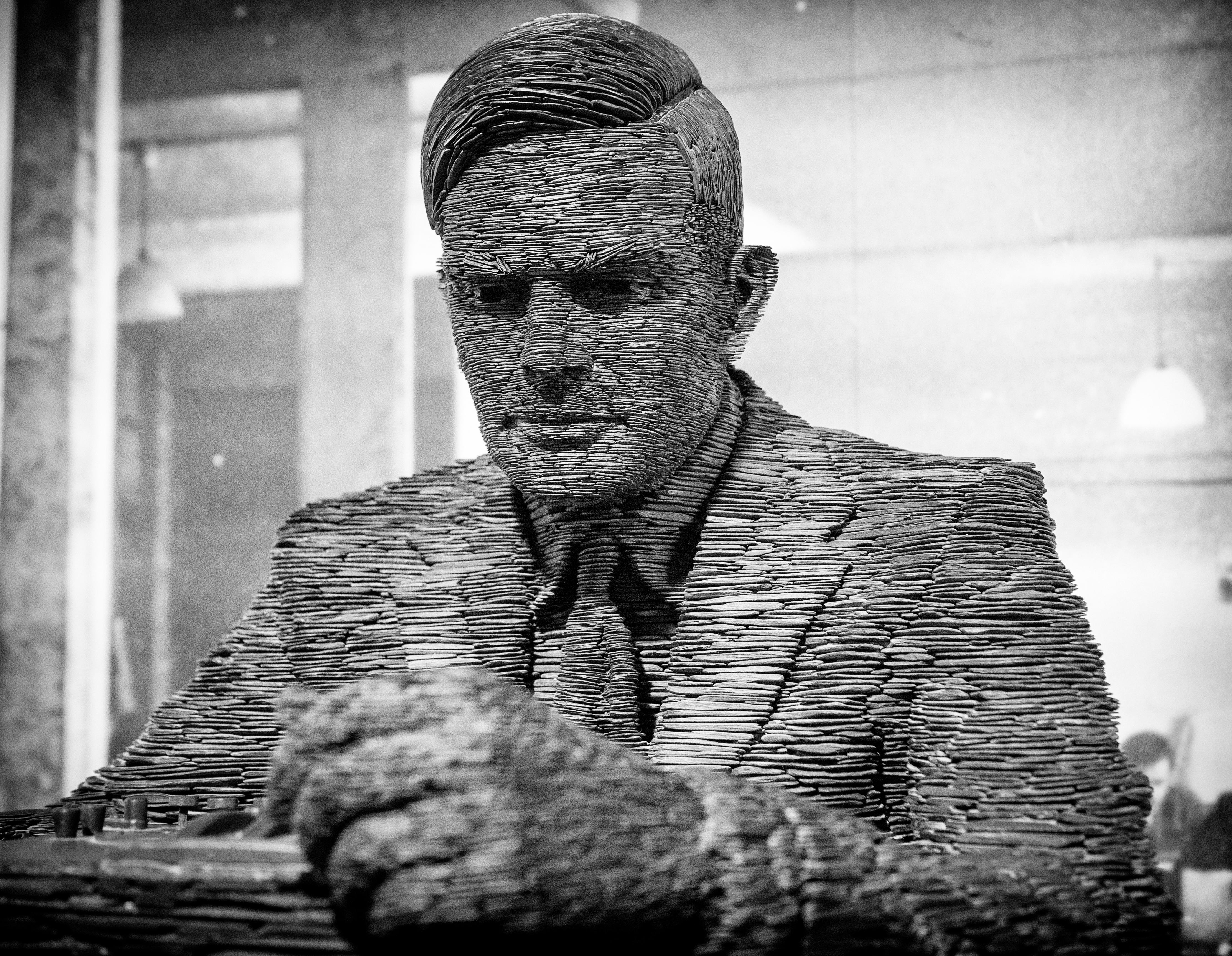
During World War II, Turing played a crucial role in breaking German codes, contributing significantly to the Allied victory. His work at Bletchley Park, Britain's codebreaking center, involved developing the Bombe to decrypt messages encrypted by the German Enigma machine. Turing's efforts in codebreaking were shrouded in secrecy for many years due to the classified nature of his work.
In 1950, Turing introduced the concept of the Turing Test, a benchmark for determining a machine's ability to exhibit human-like intelligence. This concept has been influential in the philosophy of artificial intelligence, challenging researchers to create machines capable of indistinguishable human-like conversation.
Despite his significant contributions, Turing faced discrimination for his homosexuality, which was criminalized in the UK at the time. In 1952, he was convicted of "gross indecency" and faced chemical castration. Tragically, Turing passed away on June 7, 1954, in what is widely believed to be a suicide. It was only in recent years that Turing received posthumous recognition for his contributions to science and was granted a royal pardon in 2013.
Alan Turing's legacy extends far beyond his lifetime. The Association for Computing Machinery (ACM) awards an annual prize for the most important contributions to computer science. The ACM A.M.Turing Award is considered the Nobel Prize of computing and was established in his honor, reflecting the profound impact he had on the field.